KFC, Liquid Death and Lancôme: 2026’s Top Brand Partnerships

Customer acquisition costs have reached unsustainable peaks for many brands.
Driven by the final deprecation of third-party cookies, stricter data privacy regulations and the saturation of algorithmic feeds, brands are realising that traditional performance marketing is yielding diminishing returns.
Marketing chiefs are rapidly shifting their budgets away from isolated digital shouting and toward a more effective strategy: strategic brand partnerships.
Co-branding is no longer just a fun PR stunt. Instead, it allows brands to ethically bypass the friction of organic audience building.
The core philosophy driving the partnership renaissance is simple: why spend millions trying to build an audience from scratch when you can borrow the trust of a brand that’s already done the heavy lifting?
Instead of competing for the same exhausted eyeballs in a crowded digital space, co-branding allows companies to seamlessly cross-pollinate their most loyal advocates.
When two complimentary brands align, they do more than share mailing lists; they combine cultural capital and create a temporary micro-culture that excites their respective consumer bases, generating organic word-of-mouth that paid media algorithms cannot replicate.
The ROI of shared cultural capital
The data supporting this shift is undeniable.
According to ROI benchmarks from The Cirqle, well-executed brand and creator partnerships are currently delivering an average Return on Ad Spend (ROAS) of 2.5 to 3.5x across industries, with the top-performing quartile achieving an astonishing 4.5 to 7x return.
Furthermore, research from Billo’s Long-term Influencer Partnership Report demonstrates that long-term brand collaborations and always-on partnership approaches yield 70% higher engagement rates than one-off campaign bursts.
Consumers are starved for authenticity and they respond keenly when brands they love validate one another in clever, unexpected ways.
Psychographics over demographics
The anatomy of a successful brand partnership has evolved dramatically over the last five years.
It is no longer sufficient to merely slap two logos onto a limited-edition tote bag. The modern consumer demands narrative and a touch of theatre.
The most effective partnerships operate at the intersection of product innovation and cultural commentary, requiring a willingness to relinquish total brand control in favour of shared equity.
Historically, brand safety guidelines dictated that a company's intellectual property must remain heavily guarded.
Today, progressive marketing leaders understand that rigidity is the enemy of virality. By allowing a partner to playfully subvert their logo, messaging or product, brands signal confidence and self-awareness to a highly skeptical audience.
To execute at this level, Chief Marketing Officers must evaluate potential partners on both demographic overlap and psychographic alignment. Does the partner brand share our tone of voice or our risk tolerance?
When this alignment is successfully identified, the resulting campaign can dominate the news cycle, generating massive earned media value before a single paid ad is even trafficked.
A premium skincare line partnering with a blockbuster film franchise works perfectly if the fictional universe respects the prestige of the product. A fast-food chain partnering with a French vineyard is a triumph if both brands lean into the absurdity of the contrast.
Ultimately, the partnerships that win in today's landscape are those that offer the consumer a genuine surprise and delight moment – a collision of worlds that feels inevitable only after it has been announced.
It is a genuine cultural event that consumers actively want to participate in, debate and share online.
The three brand partnerships we have highlighted in this month's magazine, demonstrate how top-tier brands are mastering this discipline.
They are ditching the conservative, committee-led playbook and embracing convergence and deep immersion, to create moments that command the culture.
Liquid Death × Spotify: The “Eternal Playlist Urn” - Subversion
When canned water provocateur Liquid Death partnered with streaming giant Spotify, they bypassed traditional digital marketing in favor of a morbidly hilarious physical artifact: the Eternal Playlist Urn.
The concept allowed superfans to conceptually immortalise their most-played tracks inside a custom, heavily branded urn.
While the companies operate in vastly different sectors, they share a critical demographic: Gen-Z consumers who respond to dark humor and highly shareable goods.
By treating a digital playlist as a sacred relic, Liquid Death injected its signature nihilistic comedy directly into Spotify’s ecosystem.
Speaking publicly on their approach, Andy Pearson, VP of Creative at Liquid Death, explained the underlying strategy: “We get to go into somewhere where we wouldn't normally be and inject our form of Liquid Death chaos into whatever corner of pop culture where the brand or celebrity exists. The collaborations provide a great new space to bring in satire and parody, reach people and bring some humor to a category that we don't actively participate in.”
It wasn’t a standard cross-promotion; it was a bizarre physical manifestation of digital culture proving that when psychographics align, product categories simply don't matter.

KFC × La Vieille Ferme: The “Coq au Vin” Coup - Convergence
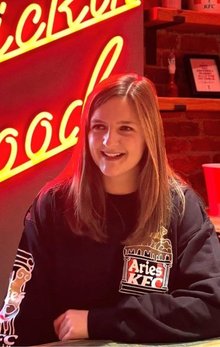
This August, KFC executed one of the most brilliant high-low dining crossovers of the year by opening Coq au Vin, a pop-up Shoreditch wine bar.
Partnering with French wine label La Vieille Ferme – affectionately dubbed “Chicken Wine” by the British public due to the rooster on its label – KFC made an internet joke incredibly literal.
For just £15 (US$20.32), guests could pair KFC Popcorn Chicken with sparkling rosé, or Hot Wings with La Vieille Ferme Rouge. It was a masterclass in social listening and agile marketing.
Phoebe Syms, Fame & Partnerships Lead at KFC UK & Ireland, summarised the campaign's undeniable logic in the official launch announcement: “We're iconic fried chicken. They're the iconic Chicken Wine. Coq au Vin is one of those partnerships that just makes sense and frankly, we can't believe it's taken this long. This August bank holiday, it's poulet all day.”
Instead of forcing a contrived luxury narrative, KFC leaned into the unpretentious joy of pairing affordable fast food with a beloved supermarket wine.
This convergence challenged conventional pairing rules while giving consumers a highly Instagrammable experience, cementing KFC’s reputation as a brand that acutely understands British cultural quirks.
Lancôme × The Devil Wears Prada 2 - Immersion
Lancôme’s decision to serve as the official skincare partner for The Devil Wears Prada 2 represents the gold standard for modern product placement.
Rather than settling for a fleeting on-screen cameo, Lancôme built the entire launch campaign for its new Absolue Longevity MD range directly inside the film’s fictional Runway magazine universe.
This deep immersion allowed Lancôme to leverage immense cultural nostalgia while positioning its skincare line as an elite status symbol - exactly the calibre of product Miranda Priestly would demand.
Discussing the campaign's development, Pierce Thiot, Co-head of Creative for Brand and Entertainment at Maximum Effort (the agency behind the activation), explained the philosophy: “Everything that you do with movie marketing can be part of the storytelling. We loved building out these little micro-moments within the world: little pocket universes within the story that don't talk to or affect the film, but play within that world.”
By blurring the lines between fiction and reality, the partnership transformed a standard beauty launch into an interactive cultural event.
Consumers weren't just buying luxury face cream; they were buying a tangible piece of a beloved cinematic universe.
Top 10 Vendors in Strategic Brand Partnerships
1) Bumble × OpenTable: By integrating real-time restaurant reservations directly into the dating app, this partnership successfully removed the friction of planning a first date while driving massive booking volume.
2) IKEA × Rivian: This highly anticipated collaboration brought accessible Swedish design to the booming ‘van life’ aesthetic, launching a modular line of sustainable car-camping accessories tailored for EVs.
3) Uber Eats × Netflix: Tapping directly into ‘dinner and a movie’ behaviour, this seamless integration allowed viewers to order custom, show-themed takeout menus directly through their smart TVs without pausing the screen.
4) Strava × Oura: Merging cardiovascular tracking with deep recovery metrics, this technical alliance created the ultimate holistic dashboard for everyday athletes, dominating the 2026 wearable conversation.
5) Glossier × A24: A masterclass in millennial and Gen-Z cultural alignment, this indie-film-inspired makeup capsule brought cinematic storytelling to everyday beauty routines.
6) Patagonia × Depop: Formalising their commitment to circular fashion, the outdoor giant partnered with the Gen Z resale app to launch an officially sanctioned, verified second-hand storefront.
7) Discord × AMC Theatres: Blurring the line between digital watch parties and physical cinema, this gaming-adjacent crossover allowed online communities to easily book private, discounted theater screenings together.
8) LEGO × The Legend of Zelda (Nintendo): After years of fan petitions, this long-awaited 2026 launch united two fiercely nostalgic, intergenerational brands to create the year's most hyped collectible sets.
Did you know?
Company portals






















Executives
Andy Pearson
VP of Creative
Phoebe Syms
Senior Brand Manager - Fame & Partnerships
Pierce Thiot
Co-head of Creative for Brand and Entertainment