How Polestar's Climate Push Drove 34% Sales Growth

Swedish electric vehicle manufacturer Polestar has reduced emissions per vehicle sold by 31% since 2020 while increasing revenue by 50% in 2025.
The performance shows how sustainability targets can align with commercial growth for premium automotive brands.
Polestar delivered more than 60,000 vehicles during 2025 and reported 34% sales growth. According to the company, the adjusted post-tax loss decreased to US$783m, representing a US$297m improvement year on year.
The brand targets production of a net-zero car without offsets by 2035.
This positioning differentiates Polestar in a market where competitors continue to invest in hybrid powertrains and combustion engine variants.

Strategic carbon pricing mechanisms
Polestar introduced an internal shadow price of carbon in 2022 to guide procurement and design decisions.
The mechanism functions as an analytical tool in business cases and material comparisons rather than as a fee collection system.
The internal carbon price allows the company to evaluate options with different emission profiles. It helps prioritise decarbonisation actions across the supply chain.
Polestar uses blockchain technology to track cobalt, mica, nickel and lithium through its supply chain. This transparency supports brand credibility with environmentally focused customers.
The company does not disclose the specific shadow price figure. It clarified that the internal carbon price does not involve fund transfers.
Value proposition for customers
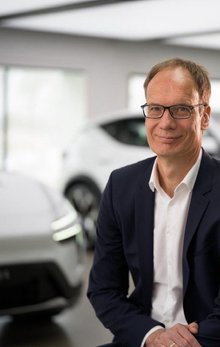
Michael Lohscheller, CEO of Polestar, says: "Electrification delivers clear value for customers: lower running costs, lower emissions and greater peace of mind, as volatile oil prices and fuel scarcity mean pump anxiety is increasingly replacing range anxiety."
The spread of clean energy across European electricity grids contributed to the company's emissions profile.
According to Michael, cleaner electricity infrastructure makes EVs more practical and accessible for consumers. "As clean electricity scales, electric vehicles are becoming not just the sustainable choice, but the smarter, more reliable one," he says.
This positioning appeals to buyers who prioritise total cost of ownership and energy security alongside environmental considerations. The messaging shifts focus from range limitations to fuel availability concerns.
Material innovation and differentiation
Polestar opened its Mission 0 House in Gothenburg in 2024 to develop zero-emission materials and processes. The facility operates as a research centre for competitive advantage in vehicle manufacturing, focused on four research areas:
- a large-scale pilot for ultra-low-emission steel
- research on materials for batteries
- the development of bio-based textile alternatives
- technologies to convert CO₂ into new materials.
Fredrika Klarén, Head of Sustainability at Polestar, says: "The Polestar 0 project pushes us into new territory. While much of the industry invests in hybrids and combustion engines, we focus on solutions that eliminate emissions entirely.
“The innovation emerging from this project shows the power of collaboration and material science, and importantly, how well positioned we are to move the industry forward."
Steel and lithium extraction ranks among the most carbon-intensive activities in automotive supply chains. Polestar attributes its 31% emissions decrease to expanded use of renewable energy in battery production and manufacturing.
The company increased its use of low-carbon materials across vehicle components. This approach reduces production emissions while maintaining product quality and performance specifications.
"If you are not reducing emissions while growing, you are choosing not to," Michael says.
The statement positions emission reduction as a strategic choice rather than a regulatory compliance issue, framing decarbonisation as a management priority that runs parallel to commercial expansion.
Polestar emphasises resource efficiency and circular economy principles. The company pursues circular materials, modular designs and mono-material designs to support high-value recovery and quality recycling.
This approach reduces environmental impact while maintaining vehicle value. It also creates circular business opportunities throughout vehicle lifecycles.
The delivery of more than 60,000 vehicles during a period of 34% sales growth indicates demand for zero-emission mobility among environmentally focused buyers.
Company portals

Executives

Fredrika Klarén
Head of Sustainability
Michael Lohscheller
Chief Executive Officer