Is Channel 4 Onto Something by Marketing AI Presenters?
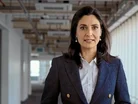
In a move that could inform future content and marketing strategies across industries, Channel 4 has broadcast a documentary fronted entirely by an AI-generated presenter.
The programme, titled Will AI Take My Job? Dispatches, explored the impact of automation on employment by using the very technology it was examining.
The catch was that viewers were only made aware of the presenter's artificial nature in the final moments of the show.
Aside from confusing viewers and the general public, the broadcast serves as a case study in the capabilities of generative AI, particularly its potential applications within media and marketing.
Throughout the show the presenter narrated segments, conducted interviews and reported from various locations in a manner largely indistinguishable from a human counterpart.
The reveal was a fun, if not slightly ominous demonstration of AI's power, with the presenter revealing: "AI is going to touch everybody’s lives in the next few years. And for some it will take their jobs.
"Because I’m not real. In a British TV first, I’m an AI presenter,” it added.

AI's role in trusted journalism
The project was a joint effort between the documentary's producer Kalel Productions and Seraphinne Vallora, a company specialising in AI-generated fashion content.
By using machine learning models a digital human was synthesised from text prompts with an artificially generated face, voice and body movements.
While Channel 4 presented the reveal as an exercise in transparency, the broadcaster also clarified that this is not a production method it intends to use regularly.
Louisa Compton, Head of News and Current Affairs Specialist Factual and Sport at Channel 4, explained the channel’s position on the matter: “The use of an AI presenter is not something we will be making a habit of at Channel 4 – instead our focus in news and current affairs is on premium, fact-checked, duly impartial and trusted journalism – something AI is not capable of doing.
“But this stunt does serve as a useful reminder of just how disruptive AI has the potential to be – and how easy it is to hoodwink audiences with content they have no way of verifying.”
The blurring line between human and machine
The experiment with an AI presenter shows how advanced the technology has become, blurring the lines between human-led and machine-led content creation.
This has implications for brands and media organisations considering AI for customer-facing roles or marketing materials, where authenticity is still the order of the day.
The convincing nature of the fabrication touches upon wider concerns about deepfakes and the potential for AI to be used in spreading misinformation.
Adam Vandermark, Commissioning Editor for News and Current Affairs at Channel 4, noted the sophistication of the artificial presenter, saying: “Kalel Productions worked hard to make the reporter feel and appear as authentic as possible, but of course, AI couldn’t do the work of an investigative journalist. Or could it?
“It’s far too early to tell, but it’s certainly a revelation to see this imaginary presenter front a Dispatches in such a clever and realistic way.”
Production costs and future capabilities
The documentary pointed out that according to its findings nearly 75% of UK employers have already integrated AI to perform tasks previously handled by human employees.
This statistic is highlighted by the production methods of the programme itself.
The economic incentives for using AI are a key factor in its adoption, a trend that marketing departments are also evaluating.
Nick Parnes, CEO of Kalel Productions, views this as a development motivated by financial pressures and technological progress.
He says: “This is another risky, yet compelling, project for Kalel. It’s been nail-biting to create the AI presenter in time. Ironically, it gets even more economical to go with an AI Presenter over a human, weekly.”
He also commented on the rapid improvement in the underlying technology, adding: “And as the generative AI tech keeps bettering itself, the Presenter gets more and more convincing, daily. That’s good for our film, but maybe not so good for people’s careers.”