Does Starbucks's Employee Pay Shift Impact Brand Perception
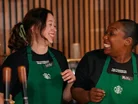
Starbucks is reconfiguring its US workforce compensation model by introducing weekly pay for hourly workers from August, a move that could signal a broader brand revitalization strategy centred on employee advocacy and operational excellence.
The weekly payment structure forms part of the 'Back to Starbucks' programme led by Chief Executive Officer Brian Niccol. The initiative targets customer experience improvements whilst positioning baristas as brand ambassadors who can influence customer perception at every touchpoint.
Sara Kelly, Chief Partner Officer of Starbucks and Mike Grams, Chief Operating Officer, say in a joint announcement that the decision was made to "help hourly partners have more ways to share in the success of Back to Starbucks".
According to Sara and Mike: "Every day, you bring the Starbucks experience to life in our coffeehouses, from the way you welcome customers to how you support one another on shift."
The executives add: "Those small 'I've got you' moments are the heart of our coffeehouses. Your hard work is paying off. We are gaining momentum and the shine is back on the Starbucks brand."
Employee advocacy as a marketing strategy
The shift to weekly compensation could represent a strategic recognition that frontline staff function as primary brand ambassadors in service environments.
According to research by Indeed Flex, one-third of UK workers would prefer to be paid weekly, with 44% of people reporting they run out of money by the 21st of the month and 21% saying they run out of money by the 14th.
Starbucks describes its compensation structure as "one of the strongest total compensation and benefits packages in retail". The company attracts more than one million applications for barista roles in the US each year.
The Back to Starbucks Partner Reward allows baristas and shift supervisors to earn an additional US$1,200 per year when their stores meet specific metrics. New customer tipping options have also been introduced.
These incentives have the potential to increase what partners receive by 5% to 8% on average, according to Starbucks. The metrics-based rewards could demonstrate an attempt to align employee compensation with customer experience outcomes.

Simplifying operations for brand consistency
Beyond compensation adjustments, the 'Back to Starbucks' programme has introduced operational changes designed to reduce complexity and enhance brand consistency across locations.
These modifications include refurbishment efforts to encourage customers to stay, increased in-store technology usage and a reduced menu offering.
On the CEO Signal Podcast, Brian shares: "The feedback I heard was, we've made the job more complicated than necessary. It was one of those things where it's like, we got to get back to focusing on decisions that actually show up in the store, and then you got to understand how those decisions actually are executed in the store."
The streamlined approach could indicate a repositioning strategy that prioritises operational simplicity to improve both employee satisfaction and customer experience delivery.
Menu reduction in particular could mean a focus on core brand differentiators rather than product proliferation.
The company states that "connection is just as important as coffee", positioning the brand around experiential value rather than product attributes alone. This messaging shift could represent a strategic repositioning towards relationship-based customer engagement.
Customer engagement metrics show momentum
The business transformation strategy appears to be yielding measurable results. In October, Starbucks recorded its first quarterly sales increase in almost two years.
Continued momentum in Q1 2026 showed global comparable store sales increasing by 4%.
Discussing these results in an earnings call, Brian states: "Our Q1 results demonstrate our 'Back to Starbucks' strategy is working, and we believe we're ahead of schedule."
He adds: "It's great to see the sales momentum driven by more customers choosing Starbucks more often, and this is just the beginning."
The metrics could suggest that employee-focused initiatives are translating into improved customer engagement and purchase frequency.
The combination of enhanced compensation structures, simplified operations and a renewed focus on the core coffeehouse experience could indicate a marketing-driven transformation strategy.
The approach positions employee satisfaction as a lever for customer experience improvement in an increasingly competitive food and beverage landscape.
Company portals


Executives
Brian Niccol
Chairman and Chief Executive Officer
Sara Kelly
executive vice president, chief partner officer