
Why Sustainability Is Reshaping Luxury Fashion Marketing
The luxury fashion sector is undergoing a fundamental transformation that could redefine brand positioning, consumer engagement and competitive advantage.
As leading houses embrace responsibility-led strategies, Chief Marketing Officers face both challenge and opportunity in communicating values-driven luxury to increasingly discerning audiences.
When Stella McCartney established her Gucci-backed label in Paris in 2001, she introduced a radical proposition: eliminating leather, fur and skins entirely. The decision prioritised ethics and transparency over conventional luxury positioning.
Industry observers questioned the commercial viability, with McCartney recalling being "kind of ridiculed" and told she would never build an accessories business without leather.
By 2021, the luxury sector's acceleration towards sustainable practices suggests McCartney's approach represented early strategic foresight rather than idealism. For marketing leaders, this shift signals a broader evolution in how premium brands must articulate value, differentiation and emotional connection.
The fashion and textiles sector accounts for an estimated 2% to 8% of global greenhouse gas emissions and approximately 9% of microplastic pollution entering oceans annually. According to a 2019 McKinsey report, the industry generated 2.1bn tonnes of CO₂ equivalent in 2018, representing roughly 4% of global emissions, with the majority originating from fibre, fabric and finishing processes.
While luxury represents a relatively small production volume, its material choices carry disproportionate environmental weight. Research from New York and Cornell Universities indicates that animal-derived materials including leather, wool and cashmere comprise just 3.8% of apparel by volume yet generate around 75% of fashion's methane emissions, equivalent to 8.3m tonnes annually and nearly four times France's annual methane footprint.
Consumer expectations reshape brand narratives
The sustainability imperative creates distinct marketing challenges for CMOs in the luxury space. Traditional positioning centred on heritage, craftsmanship and exclusivity must now integrate transparent environmental and social credentials without diluting brand equity.
Consumer research provides clear direction. A 2023 survey of European luxury shoppers found that 77% consider sustainability an important purchase factor, whilst 51% would pay up to 10% more for products with reduced environmental impact in production or delivery.
These figures could suggest that sustainability messaging has evolved from niche positioning to mainstream expectation among high-value customer segments.
The secondary market's expansion reinforces this trend. The global second-hand fashion and luxury market could reach $360bn by 2030, growing three times faster than the primary market.
For marketing leaders, this shift introduces new considerations around product durability, repairability and resale value as core brand attributes rather than afterthoughts.
Regulatory and investor pressures intensify
CMOs must navigate an increasingly complex stakeholder landscape. The EU Strategy for Sustainable and Circular Textiles, launched in March 2022, is being translated into binding regulations on ecodesign and recycled content, elevating compliance from operational concern to brand positioning imperative.
Investor scrutiny adds further dimension. Environmental and social performance increasingly functions as a proxy for operational discipline and long-term value creation, influencing corporate reputation beyond traditional consumer-facing channels.
The luxury sector's structural advantages could provide marketing differentiation. High margins, limited production volumes and consumers committed to 'buying less, but buying better' create space for investment in alternative materials, regenerative agriculture and supply-chain traceability that mass-market competitors struggle to match.

Industry collaboration signals strategic consensus
Collective action among luxury houses indicates the shift extends beyond individual brand initiatives. In 2012, Kering piloted an Environmental Profit & Loss account with Puma, representing one of the first attempts by a luxury group to quantify natural capital impact.
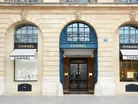
Subsequently, Chanel, Gucci, Giorgio Armani and others eliminated fur from product lines.
In 2019 Kering Chief Executive François-Henri Pinault launched the Fashion Pact at the G7 in Biarritz, uniting dozens of brands around shared commitments on climate, biodiversity and oceans. The group, including Chanel, Moncler Group, Prada Group and Hermès, recently introduced the European Accelerator initiative to enhance supplier data and advance sustainable supply chains.
For CMOs, these collaborative frameworks could offer both validation and competitive pressure, establishing sustainability credentials as baseline expectations rather than differentiated positioning.
The marketing challenge lies in communicating authentic progress whilst maintaining the aspirational narrative essential to luxury brand equity. As the sector reshapes its definition of modern luxury, marketing leaders must articulate how responsibility enhances rather than compromises desirability.
Company portals


Executives

Luca de Meo
CEO

Stella McCartney
Founder