How LG’s Marketing Shift Fuels a US$13.8bn Strategy Pivot
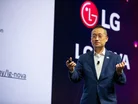
LG Electronics is accelerating its evolution from consumer electronics manufacturer to platform-based smart life solutions provider, with a new organisational structure positioning sales and marketing at the centre of its US$13.75bn transformation agenda.
The South Korean technology giant's latest executive reshuffle and divisional reorganisation signal a strategic shift that could redefine how marketing leaders drive business model innovation and commercial growth.
The Seoul-based company has established a dedicated overseas sales and marketing company to consolidate international operations across its 74,000-person global workforce.
This new entity will oversee sales subsidiaries spanning North America, Europe, the Middle East and Africa, Latin America and Asia, with a mandate to elevate brand recognition while identifying untapped growth opportunities in mature and emerging markets.
For Chief Marketing Officers navigating similar transformations, LG's approach offers a blueprint for positioning marketing as a strategic growth driver rather than a purely promotional function. The newly created division, led by former LG Electronics North America CEO Thomas Yoon and reporting directly to CEO William Cho, places commercial strategy at the executive level with direct accountability for revenue outcomes.
Platform economics reshape marketing priorities
The restructure forms part of LG's 2030 Future Vision, announced by William in July 2023, which aims to transition the business beyond its position as a leading home appliance brand towards a platform-based service model connecting customers' spaces and experiences.
This strategic pivot is underpinned by three growth engines: platform-based services, business-to-business (B2B) acceleration and procurement of new revenue streams, which the company expects will represent 50% of sales and operating profit by 2030.
According to William, the financial ambition targets an average annual growth rate and operating profit of 7%, driving global revenues to US$77.5bn by 2030.
To support this vision, the company has committed US$50tn Korean Won to expansion plans through 2030, allocating US$25tn to research and development and US$17tn to facilities investment.
For marketing executives, the implications are significant. Platform-based business models require fundamentally different go-to-market strategies, customer engagement approaches and value propositions compared to traditional product sales.
LG's structural changes suggest recognition that achieving platform economics demands commercial teams capable of orchestrating ecosystems rather than simply promoting products. This shift requires marketing leaders to develop new capabilities in ecosystem management, partner coordination and value network orchestration.
B2B expansion drives organisational change
The new sales and marketing company will play a pivotal role in expanding B2B transactions globally, with LG's Business Solutions Company scaling sales and business operations across major regions. This dual mandate – driving consumer and commercial growth simultaneously – reflects the increasingly blurred boundaries between business-to-consumer (B2C) and B2B marketing in technology sectors.

LG has also created new divisions and specialist teams within its four business units to capture emerging opportunities. The Home Entertainment Company, now led by President Park Hyoung-sei, houses a dedicated Extended Reality (XR) team tasked with developing an XR device by 2025.
The Vehicle Solutions Company has formed a Global Customer Strategy Division designed to acquire additional automotive manufacturers as clients. This expansion into automotive represents a significant growth opportunity for LG's B2B operations.
Meanwhile, the Home Appliance & Air Solution Company is establishing an engineering sales division to enhance technical capabilities across heating, ventilation and air conditioning operations, whilst consolidating its home beauty business into the home appliances and air solution division to maximise synergies.
Marketing's strategic elevation
LG's restructure illustrates a broader trend of marketing's elevation within organisational hierarchies as companies pursue transformation agendas. By creating a standalone sales and marketing entity with executive-level leadership and direct CEO reporting lines, LG has positioned commercial strategy as a core pillar of business transformation rather than a supporting function.
For Chief Marketing Officers (CMOs) and marketing leaders, this structural shift offers validation of marketing's expanding remit in driving business model innovation, orchestrating B2B growth and navigating the transition from product-centric to platform-based value creation. The integration of sales and marketing at the strategic level demonstrates how commercial functions can drive transformation.
As more organisations pursue similar transformations, the integration of sales and marketing capabilities at the strategic level could become a defining characteristic of successful change programmes. This structural approach positions marketing as a revenue driver and strategic partner in business transformation.
The LG case study provides a template for marketing leaders seeking to elevate their function's strategic importance and demonstrates the organisational changes required to support platform-based business models.
Company portals

Executives
William (Joowan) Cho
President & CEO