Which Thirteen Brands Drive Global Plastic Pollution?
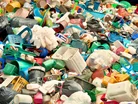
Global plastic production exceeds 400 million tonnes each year. According to a peer-reviewed study published in Science Advances by Cowger et al, only around 9% of plastic is recycled globally.
The rest ends up in landfills, incinerators or polluting the environment. The research analysed 1,576 brand audit events conducted between 2018 and 2022.
Researchers recorded nearly 1.9 million plastic items. Of these, 909,771 were linked to brands.
The data shows that increases in plastic production correspond with increases in plastic waste, volumes of plastics, associated chemicals and by-products.
Five brands dominate waste streams
According to the study, 13 companies were responsible for more than 1% each of all branded plastic items. The top five accounted for 24% of all branded waste identified globally.
The Coca-Cola Company represented 11% of branded plastic pollution. PepsiCo accounted for 5%.
Nestlé contributed 3%. Danone also represented 3% of the total.
Altria was responsible for 2%. The findings show that food and beverage marketing strategies, particularly for on-the-go consumption, may influence disposal patterns.
According to the research, 56 companies alone are responsible for more than half of all branded plastic pollution recorded worldwide. Brands including Mayora Indah, Mondelez International, Mars Incorporated, Salim Group and British American Tobacco also appeared in the top polluter list.
Production volume correlates with pollution
The study identified a relationship between plastic production and pollution. Companies that produce more plastic see more branded plastic found polluting the environment.
This pattern held regardless of geography or waste management infrastructure. The research suggests that production volume, rather than regional recycling programmes, may be a core driver of environmental harm.
Food and beverage products tend to be consumed quickly. This consumption pattern, often associated with on-the-go marketing campaigns, could increase the likelihood of single-use plastic being discarded in public places.
Even companies with waste mitigation programmes showed the statistical pattern. Higher production correlated with higher pollution in the environmental audit data.
Marketing leaders respond to findings
"We remain committed to building long-term business resilience and earning our social license to operate through our evolved voluntary environmental goals," says Bea Perez, Executive Vice President and Global Chief Communications, Sustainability & Strategic Partnerships Officer at The Coca-Cola Company.
"These challenges are complex and require us to drive more effective and efficient resource allocation and work collaboratively with partners to deliver lasting positive impact."
Coca-Cola collected more than 100,000 branded items in environmental audits. The confidence intervals confirm the statistical robustness of this finding.
Among Coca-Cola's initiatives is a UK-based pilot for plastic bottles without labels. The programme is designed to reduce packaging waste and simplify recycling logistics.
"Going label-less might seem like a small step, but it is one of several ways we are exploring making recycling easier, minimising waste and minimising the impact of our packaging on the environment," explains Dusan Stojankic, VP Franchise Operations, GB&I at Coca-Cola Great Britain.
Javier Meza, President, Marketing & Europe CMO, Coca-Cola Europe, says: "This trial could contribute to longer-term changes to the way brands communicate with their consumers."
The label-less trial may show how brand communication strategies may need to adapt. However, critics argue that design changes must be accompanied by reductions in plastic production.
Consumer brands face accountability calls
PepsiCo ranked second in the audit, with 5% of the global branded plastic footprint. The company's consumer brands, including Lay's, 7UP and Quaker, appear commonly in global waste streams.
"As circumstances evolve, PepsiCo continually adapts how we source ingredients; make, move, and sell our products; and inspire people through our brands," explains Ramon Laguarta, Chairman and CEO.
"Our goals must evolve with us to keep our ambition and to deliver on our long-term vision."
PepsiCo's sustainability programme, pep+, is designed to transform its value chain. The data suggests more action is needed to curb the company's contribution to single-use plastic waste.
Nestlé, Danone and Altria each contributed 2 to 3% of branded plastic waste. All three companies operate primarily in food, beverage or tobacco sectors.
These industries are associated with short-lived, single-use packaging. Marketing strategies in these sectors often emphasise convenience and portability.
Regulatory proposals target producers
The study argues that voluntary efforts may be insufficient. The researchers propose several regulatory changes.
An international open-access database where companies must disclose packaging outputs and environmental impact could provide transparency. Mandated labelling standards could make tracking pollution sources easier, even after weathering and degradation.
Production caps could prevent pollution by reducing plastic output, particularly for single-use items. Extended Producer Responsibility policies could require clean-up and recovery investments.
"We know we will have more chapters in our journey and that we can't do it alone," says Bea.
"Continued collaboration, targeted investments and well-designed policies are crucial to help create shared value for all."
The Ellen MacArthur Foundation and other bodies have shown that corporate pledges must translate into measurable reductions. The Cowger et al study offers a link between plastic production and pollution by quantifying impact across 84 countries.
The research names companies, provides statistical analysis and offers a foundation for policy reform. Marketing departments at major consumer brands may need to reconsider packaging choices and brand communication strategies in response to the findings.