EV Sales Rise 44% as Fuel Costs Reshape Consumer Demand
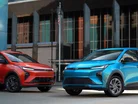
Tensions in the Middle East have pushed fuel prices higher across Europe and Asia. Consumers have responded by purchasing battery-powered vehicles in record numbers.
According to Bloomberg, consumers in France, Germany and the UK purchased 206,200 electric vehicles (EVs) in March 2026. This represented a 44% increase on 2025.
Bloomberg's data shows electric car transactions in South Korea more than doubled during the same period. In Italy, 16,000 battery-powered vehicles were sold last month, a 67% increase on the previous year.
How electric vehicles operate
Battery-powered vehicles use an electric motor for propulsion. This differs from fossil fuel combustion engines used in conventional transport.
Internal combustion engine vehicles generate power through controlled explosions in cylinders. This process requires management of intense heat.
Battery-powered systems manage electromagnetic fields and chemical energy storage. These systems avoid the thermal losses associated with combustion processes.
Jan Rosenow, Professor of Energy and Climate Policy at Oxford University, says: "ICE vehicles waste a whopping 80% of energy in their fuel. EVs are propelled by entirely different mechanisms."
Jan adds: "Energy enters the vehicle as electricity, which directly powers the drivetrain making it three to four times more efficient from a final energy perspective."
Efficiency metrics and comparisons
According to the US Department of Energy, EVs convert more than 77% of electrical energy from the grid to power at the wheels. Conventional petrol vehicles convert only 12% to 30% of the energy stored in fuel to power at the wheels.
The Department of Energy data shows electric drive systems are responsible for 15% to 20% energy loss. Petrol engines lose 64% to 75% of energy.
Battery-powered vehicles use regenerative braking to recapture energy normally lost during deceleration. The technology allows vehicles to avoid wasting energy while idling.
According to the Department of Energy, EV energy efficiency varies by drive cycle. It ranges from 60% to 66% in city conditions and from 71% to 73% on highways.
If regenerative braking is counted, EV energy efficiency can exceed 94% in cities and 77% on highways, according to the Department of Energy.

Environmental considerations and emissions
Battery-powered vehicles running only on electricity produce zero tailpipe emissions. Manufacturing processes do generate emissions, particularly in battery production.
Batteries depend on materials including zinc, lithium and nickel. These are extracted through mining operations.
Electricity production itself can cause emissions. The level depends on how electricity is generated.
According to the US Environmental Protection Agency, an EV is typically responsible for lower levels of greenhouse gases than an average new petrol car. This accounts for manufacturing and electricity production factors.
Recycling EV batteries could reduce emissions associated with manufacturing. The process reduces the need for new materials.
BMW and Renault have begun work on battery recycling programmes.


Executives
Jan Rosenow
Professor of Energy and Climate Policy