Nike Cuts Budget While Increasing Marketing Investment
Nike has announced US$2.5bn cost-cutting effort while simultaneously increasing its marketing investment.
Pace, a five-year programme announced by the brand, aims to trim costs through "fewer roles across Nike" while channelling resources directly back into brand storytelling.
“These decisions are about redirecting investment toward the areas most critical to winning: product innovation, brand storytelling, consumer connection, sport and growth,” Elliott Hill, President and CEO of Nike, shared in a staff memo.
According to Elliott, this is “not a new strategy, and it is not a reaction to one quarter”.
These decisions are about redirecting investment toward the areas most critical to winning: product innovation, brand storytelling, consumer connection, sport and growth."
Increased investments in marketing
The Pace programme restructures Nike around four key shifts: accelerating supply chain modernisation, consolidating regional operations from four areas to three, opening a new campus in China and implementing changes to Nike's “work and workforce”.
Despite this, in Nike’s quarter ending 31 August 2026, the company’s demand creation budget – which covers marketing, advertising and sponsorship – rose 5% year on year to US$1.3bn, a sharp reversal from the 4% decline recorded in the previous quarter.
The investment sits as part of the Sports Offense playbook implemented by Elliott upon his return.
This strategy anchors the brand directly to sport through major moments like the 2026 FIFA World Cup and athlete-led storytelling rather than price discounting, with marketing shifting away from generalised campaigns towards sport-specific micro-communities.
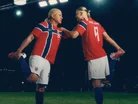
The company’s 2026 FIFA World Cup campaign, for instance, focused on encouraging young players to embrace instinctive and joyful football.
“We made this film to meet football communities exactly where they are, not just on a screen, but in their world and deeply ingrained into their subcultures,” Helena Thornton, VP, Nike Brand Management, said of the campaign.
“We didn’t want to follow the traditional marketing playbook. We wanted to give them something worth talking about, worth clipping, worth wearing, worth showing up to. A story they don't just watch – one they can make their own. That’s the whole idea behind our universe of Nike Football.”

Product launches and future strategy
Early evidence of the performance-led marketing approach includes the performance category – covering running, football, basketball, training, tennis and golf – which grew in high single digits.
A prominent example of this strategy in action was the 1 October launch of the Caitlin 1, Caitlin Clark's debut signature shoe, which nearly sold out within hours.
“Today, we activated the largest women's signature shoe launch in Nike's history,” Elliott said, noting that 5,000 doors – double the average for a Nike basketball signature shoe – supported the release alongside the company's largest holiday product campaign.
Challenges remain across other key divisions. Elliott acknowledged that “we've been oversupplying our iconic retro product, asking them to do too much”, as the brand works to reduce reliance on Jordan retro lines.
Meanwhile, recovery in China is expected to require multiple seasons.
Investors have expressed caution over near-term revenue projections, with shares falling around 10% to a 12-year low near US$31.58 following forecasts of steeper sales and profit declines this fiscal year.
“At our size and scale, meaningful change takes time,” Elliott told investors.
- US$2.5bn cost-cutting effort: Nike is implementing a US$2.5bn cost-reduction strategy through its five-year Pace programme.
- US$1.3bn demand creation budget: Spending on marketing, advertising and sponsorship increased by 5% year on year during the quarter ending 31 August 2026.
- 5,000 retail doors: Double the average retail presence for a Nike basketball signature shoe supported the launch of the Caitlin 1.
- 10% share price drop: Company shares fell by around 10% to a 12-year low near US$31.58 following steeper revenue decline forecasts.
- Consolidating operations from four areas to three: Nike is restructuring its global footprint by reducing its regional operations from four areas down to three.
Who are Nike’s key partners?
- Cognizant: Cognizant and Nike have a multi-year enterprise agreement to manage global IT operations, infrastructure support and backend solutions for Nike’s digital platforms.
- Google: Nike collaborated with Google on AI-powered shopping integrations, bringing in multi-item universal commerce checkouts directly into search and assistant tools.
- Apple: Integrates wearable technology and ecosystems like the Apple Watch in order to power fitness tracking and apps like Nike Run Club.
- NFL: Nike and the NFL have an exclusive, long-term partnership making Nike the official supplier of uniforms, sideline gear, practice wear and base-layer apparel for all 32 NFL teams.





Executives
Elliott Hill
President and Chief Executive Officer

Helena Thornton
Vice President, Global Brand Management, Nike