HubSpot on AI Agents, Data Strategy and Marketing Growth
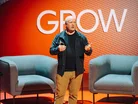
HubSpot Grow Europe took place on 17 November, bringing together marketing, sales and CX leaders across Europe.
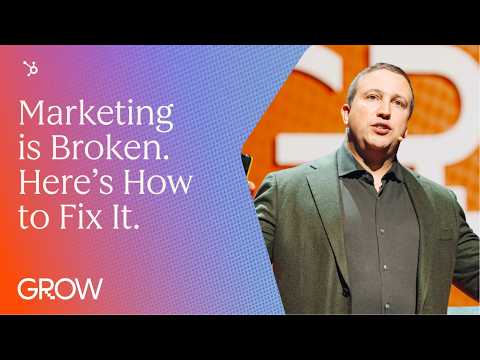
At the event, Marketing Chief sat down with Adam Cuzzort, HubSpot’s VP of Product and GM of Marketing Products.
Adam, who first joined the company around 11 months ago, joined us for a conversation about how AI agents can genuinely simplify operations, where businesses should draw the line between AI execution and human judgment and the crucial role data plays in a modern marketing strategy.
What determines whether AI agents actually simplify operations, instead of becoming just another tool to configure and manage?
I think what we've seen over the last probably six months is that more and more customers and marketers that I talk to in the industry have shifted from a focus on tools and how AI actually produces the value, to outcomes and the actual value that it produces.
One of the ways that we're seeing that adoption move from the actual technology and understanding the tools and the agents and that into the outcomes is making the AI much more accessible for customers. And for us, Breeze Assistant is the way that we do that. We've really reinvented Breeze Assistant so that it not just not only answers questions about how to use HubSpot, but also how to actually get go to market outcomes done.
For a marketer, that could be: Breeze, help me build a campaign, or even: find out what an effective campaign strategy is. Breeze uses growth context and HubSpot to do that.
So I think it's really about leveraging the power of the underlying data, which we call growth context, and the AI itself to actually just deliver outcomes rather than focusing on the implementation of the tools themselves.
Where should businesses draw the line between tasks an AI agent executes on its own, and decisions that still require a human?
One of the reasons that this has been so hard for folks is that the capability of agents has continued to improve and cover more of the work – so the question of where humans actually belong in the process has gotten more and more nuanced.
Ultimately, it comes down to judgment and taste.
As humans, we are still responsible for the work that gets produced by the agent, how it impacts our customers and how it impacts our go to market.
So, where there is something that requires human level judgment, that is still very much a human job.
This is even more true in marketing. A lot of the time, marketing is about having a very unique point of view – really understanding your brand voice and how you want your brand to be perceived.
That is very much a creative process, so while AI can help and build efficiency and take a lot of that load off of our humans, we need to make sure that we’re using AI to amplify the human point of view that we already have, rather than replace it.
"Marketing is about having a very unique point of view."
If you had one key piece of advice for marketers who are looking to embed AI, what would it be?
I would say more and more that marketing is really all about data.
As marketing has changed and become more complex, and growing demand is as difficult as it has ever been, your data strategy should be connected to your experimentation strategy, which should be connected, of course, to your marketing strategy.
To create a really effective loop for AI, your data strategy should be built not just on marketing data, but also on sales data across the entire customer journey and into a learning loop for – for your agents, of course, but also for your people.
In the past, we've always talked about this desire for marketing and sales to work better together. That's really a data problem, and so agents can really help.
AI can help uncover things that are working in deal cycles and bring those insights back into marketing, so that we can run more effective campaigns on what's working and what our best customers look like.
But I would say, really think about connecting your data strategy to experimentation. We can run experimentation at a larger scale now with AI than we used to in the past where it was very much run by humans, so we can really find out what's resonating and what's working and then double down on those things.
To wrap things up, what are the biggest takeaways you want people to remember?
Ultimately, this really comes down to three things for us.
One is the power of context. Context is the thing that makes agents more frictionless, because they all start from the same fundamental understanding.
Then the next thing is for us is what we call our customer harness, which is really Breeze Assistant. And that is about making sure that AI is accessible. We've really built our Marketing Studio and Breeze to work very closely together. And then it's all about the outcomes.
So being able to measure the outcomes is really what we're focused on.
- 2,000+ in-person attendees: HubSpot GROW Europe 2026 sold out in London, bringing together more than 2,000 marketing, sales, and customer experience leaders.
- 2x footprint growth since 2025: HubSpot doubled the scale of the conference compared to GROW Europe 2025, making the 2026 edition its largest European event to date.
- 80% senior decision-makers: Four in five attendees at the flagship event were business leaders and decision-makers.
- 18 sessions across three stages: The one-day agenda packed 18 dedicated sessions across three stages, featuring speakers from HubSpot, ElevenLabs, Lovable and Supermetrics.
- Two connected London venues: To accommodate the expanded capacity, the event spanned both Royal Festival Hall and Queen Elizabeth Hall at London's Southbank Centre.
Who are HubSpot’s key partners?
- Amazon Web Services (AWS): AWS serves as a core cloud technology partner under a multi-year Strategic Collaboration Agreement.
- Google Cloud: Through a longstanding technical alliance, Google links its cloud infrastructure and advertising ecosystem directly into HubSpot's CRM. Joint customers can host regional data on Google Cloud while synchronising first-party CRM audiences with Google Ads to measure full-funnel campaign attribution.
- Anthropic: HubSpot and Anthropic partner to connect Claude with HubSpot CRM data, allowing teams to query records, generate insights and visualisations and take actions in HubSpot from Claude.
- Microsoft: HubSpot and Microsoft collaborate through official integrations that connect HubSpot's CRM and marketing tools with Microsoft 365, Teams, Copilot, Dynamics 365 and Microsoft Advertising.





Executives
Adam Cuzzort
GM & VP of Product