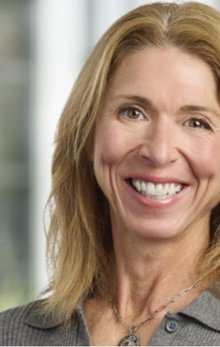
Entrust's CMO: Marketing Must Earn Consumer Trust

AI may speed up the time it takes to create content – but do your buyers trust it?
In this exclusive Q&A with Marketing Chief, Karen Kaukol, Chief Marketing Officer at Entrust, shares her insights into bringing AI into the marketing function – from encouraging safe team experimentation with AI to measuring true business return beyond simple time savings.
She also discusses the skills employees need for the future marketing workforce, and explains how working within the security sector can shape a more transparent, trust-first approach to customer engagement.
Please introduce yourself and your role.
I’m Karen Kaukol, Chief Marketing Officer at Entrust. We help organisations verify identities, protect sensitive data and secure the credentials they depend on, from the passport in your pocket to the login on your phone. I lead global marketing, brand and strategy. In plain English: I help make sure the world knows who we are, and I help the business grow.
I joined Entrust in 2016, with a background across marketing, product and payments. It’s a fascinating time to be a CMO. AI is changing how we work, but understanding customers and making good decisions still takes real judgment.

How do you encourage your team to experiment with AI and avoid the risk of moving too slowly, especially in a security-focused company like Entrust?
AI makes it easier to test an idea. It’s reduced the time and cost of exploring messages, audiences and creative approaches, so we can learn before committing to a bigger investment. We share the flops as well as the wins. There’s useful learning in both.
Recently, a colleague and I used AI during a call to explore new website treatments and headlines in response to analyst feedback. We could start discussing options immediately, instead of scheduling a few meetings to scope the work. And probably a meeting to plan those meetings.
In a security company, people also need clear boundaries: which tools and data they can use, and where human review is required. Leaders need to make those expectations clear so people can experiment with confidence. Nobody does their best work waiting for a permission slip.
Nobody does their best work waiting for a permission slip."
As a marketer, how do you actually measure the true business value and financial return of your AI tools?
Hours saved matter. The next question is what we do with that time. I think about value at three levels: time and cost, quality and business results.
We’ve built campaigns in a couple of weeks that would normally take four. That’s a useful productivity result. To establish financial return, I want to understand the costs involved, including the tools, and whether we’ve reduced spending or used the capacity to produce better results.
Are we testing more ideas? Reducing rework? Improving conversion or creating qualified pipeline at a better cost? Those are the questions that connect efficiency to business value.
I’m cautious about precise AI savings claims. Faster production is something we can observe. Revenue impact needs evidence. The goal is to understand both, without giving AI credit for every good thing that happens.
- Karen Kaukol joined Entrust in 2016, bringing a professional background spanning marketing, product and payments.
- Entrust completed marketing campaigns in a couple of weeks using AI tools, cutting down a process that typically takes four weeks.
- A complex dashboard analysis covering pipeline by region, product and campaign was synthesised with AI in 10 minutes, replacing a workflow that previously took a week of team effort.
- Entrust measures the return on AI investments across three specific dimensions: time and cost, quality and business results.
- According to Entrust's Know Your Employee report, 91% of surveyed IT and security leaders in the US and UK reported that their organisation experienced a workforce identity incident or near miss in the preceding two years.
What are some of the ways you’ve redesigned marketing workflows from the ground up to take advantage of AI?
Pipeline analysis is a good example. I recently used AI to analyse a complicated dashboard by region, product and campaign. Within 10 minutes, I had a digestible report and recommendations on the marketing mix for the second half. Previously, pulling that analysis together could have taken my team a week.
That changes where people spend their time. I want the workflow to start with a business question, use AI to accelerate the analysis then put the team’s expertise into checking the findings and deciding what to change. After that, we need to see whether the changes worked.
The 10-minute report is the start of that process. Data definitions, context and the recommendations still need expert scrutiny before we act.
We’re applying the same thinking to content and creative development. When research and early drafts take less time, people can spend more time testing the idea, understanding the customer and improving what we put into market.

As AI changes the ways we work, what specific skills are you prioritising when hiring or training your team today?
AI fluency paired with judgment. I want people who can use the tools across their work and challenge what comes back.
If AI recommends a campaign, can you explain why the customer would care? Is there evidence behind the claim? Do we need to talk to customers before taking the recommendation further? That’s where marketing expertise matters.
Curiosity and a willingness to change course are essential. So is having a point of view. As content gets easier to produce, understanding the customer and having something useful to say become more valuable. I want people who can make a decision and explain their reasoning.
As content gets easier to produce, understanding the customer and having something useful to say become more valuable."
The AI tools that help marketers move faster and personalise campaigns are also helping fraudsters launch faster, more convincing attacks. As the CMO of a security company, how does this reality change your approach to marketing?
As a security company, we get a front-row seat to both sides. AI helps us develop ways to fight fraud, and it helps fraudsters make attacks more convincing.
Our Know Your Employee report found that 91% of the IT and security leaders surveyed in the US and UK said their organisation had experienced a workforce identity incident or near miss in the past two years.
That puts real pressure on our buyers, especially CISOs. I want our marketing to offer practical help: explain a specific risk, show how it can be addressed and provide evidence for the claims we make. Customers need a clear way forward.
The same standard applies to our use of AI. Facts, examples and product claims need scrutiny before publication. We’re asking people to trust Entrust. Every piece of marketing should help earn that trust.
Who are Entrust’s key partners?
- Microsoft: Microsoft is a crucial global technology alliance partner across identity and cryptographic infrastructure, as the software giant uses Entrust’s certificate lifecycle management and identity verification capabilities in enterprise ecosystems such as Microsoft Entra and Azure.
- IBM: IBM and Entrust collaborate to provide enterprise-grade cryptography, data protection, and post-quantum cryptography (PQC) readiness.
- Amazon Web Services (AWS): AWS Key Management Service (KMS) integrates with the Entrust KeyControl KMS to enable customers to bring and hold their own cryptographic keys for AWS to use on their behalf.
- UK Home Office: A prominent customer in the public sector, the UK Home Office relies on Entrust to secure vital identity and border control frameworks.
Company portals





Executives
Karen Kaukol
Chief Marketing Officer