Apple and Nike Named Gen Z’s Most Loyal Brands
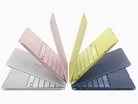
Gen Z has named Apple the brand they are loyal to and would recommend “without hesitation” in a survey conducted by Rival Technologies– with the research finding that Gen Z consumers who feel understood by a brand say they are roughly nine times more likely to remain loyal to it.
The study, which surveyed 903 Gen Z consumers across Canada and the US, found that Apple, alongside Nike and Costco, was some of the brands Gen Z consumers say they remain most loyal to.
Other highly ranked brands included Adidas, Samsung and Amazon.
“Brands put a lot of effort into earning Gen Z’s loyalty, but these findings show how closely loyalty is tied to whether people feel understood,” says Paula Catoira, Chief Marketing Officer of Rival Technologies.
“If you want to understand this generation, you have to engage them in ways that let them tell you what matters to them, in the moment and in their own words.
“Giving Gen Z more ways to share the context behind their choices can help brands get beyond assumptions and see what is actually shaping their decisions.”
If you want to understand this generation, you have to engage them in ways that let them tell you what matters to them, in the moment and in their own words.”
What factors encourage loyalty?
According to Rival Technologies, only 11% of Gen Z consumers say that brands understand them “really well” – which could have significant implications for overall brand loyalty.
But the majority of respondents say that, while they don’t feel positive about the majority of brand messaging they receive, they don’t necessarily feel negative about it either.
When asked about how brand messaging makes them feel, nearly two-thirds of respondents (64.5%) selected a disengaged response – such as “I don’t care,” or “Meh”. By comparison, 41.6% selected a positive response, and 29.7% selected a negative response.
However, there are several ways organisations can improve loyalty in their Gen Z audiences.
Price and quality were particularly strong influencing factors for encouraging loyalty.
More than eight out of 10 (82%) of respondents said price was one of the strongest ways to build brand loyalty, while 80% said the same of product quality.
Influencer recommendations, despite significant brand investments in creator marketing as of late, ranked last among the loyalty drivers measured in the report, with 9% of respondents citing them as a factor in loyalty.

- Gen Z consumers are approximately nine times more likely to remain loyal to a brand if they feel that the brand understands them.
- Despite the importance of being understood, only 11% of Gen Z consumers feel that brands currently understand them ‘really well'.
- Price (82%) and product quality (80%) are the most significant factors that encourage brand loyalty among this demographic.
- Despite heavy marketing investments, influencer recommendations ranked last in driving loyalty, cited by only 9% of the Gen Z respondents.
- When it comes to brand messaging, the majority of Gen Z is indifferent. 64.5% have a disengaged response to it, such as “I don't care” or “Meh”.
Building brand value
High levels of loyalty could help explain why Apple has been named one of the brands with the most value.
According to Brand Finance, Apple is the world’s most valuable brand, having seen a 6% brand value increase to US$607.6bn.
The company says that it calculates brand value by examining how specific marketing actions change a brand’s attributes and lead to stakeholder behavioural change.
“Today, the commercial contribution of a strong brand is well recognised,” says David Haigh, Chairman and CEO of Brand Finance. “It drives demand, supports premium pricing, attracts and retains talent, increases resilience during uncertainty and provides confidence to investors.
“Despite this awareness, many organisations still struggle to quantify brand value or explain its role in business performance. This lack of clarity often creates a gap between marketing ambition and financial decision-making, limiting the ability to invest for the long term.”
Who are Apple’s key partners?
TSMC
Taiwan Semiconductor Manufacturing Company (TSMC) is one of Apple’s most indispensable technology partners, producing the custom Apple Silicon processors that power iPhones, iPads and Mac computers. Headquartered in Hsinchu, Taiwan, the world’s dominant chipmaker operates under CEO C.C. Wei. TSMC’s cutting-edge fabrication nodes allow Apple to maintain performance and energy efficiency advantages over industry competitors. By manufacturing bespoke silicon designed in Cupertino, TSMC underpins the hardware ecosystem that sets Apple's devices apart in global markets.
Corning
Corning Incorporated serves as a pivotal material technology partner, supplying the durable glass and Ceramic Shield covers used across Apple’s mobile devices. Headquartered in Corning, New York, US, the company is led by CEO Wendell P. Weeks. Corning works closely with Apple’s engineering teams to design custom glass-ceramic formulations that offer superior drop protection and scratch resistance. Supported by Apple’s Advanced Manufacturing Fund, this long-standing partnership combines advanced materials science with precision manufacturing to safeguard flagship iPhones and iPads.
Microsoft
Microsoft serves as a key software technology partner for Apple, maintaining a landmark collaboration that dates back to 1997. Headquartered in Redmond, Washington, US, the technology giant is led by CEO Satya Nadella. This long-standing alliance ensures seamless software compatibility across Apple devices, delivering productivity tools for millions of enterprise and consumer users worldwide.
LG Display
LG Display serves as a principal screen supplier for Apple, producing high-resolution organic light-emitting diode (OLED) panels across mobile and wearable lines. Headquartered in Seoul, South Korea, the technology manufacturer operates under CEO Jeong Cheol-dong. LG Display provides advanced display hardware for flagship iPhones, iPads, and Apple Watches, engineered for colour accuracy and high refresh rates. This ongoing manufacturing alliance helps Apple secure reliable screen supplies while maintaining stringent visual display standards across its product ecosystem.
Company portals






Executives
David Haigh
CEO
Paula Catoira
CMO