United CEO Slams American for Snubbing Brand Merger Power
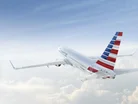
United Airlines Chief Executive Scott Kirby has criticised American Airlines for declining merger discussions that could have created one of the world's largest air carriers. The collapse of talks between the two companies raises questions about brand consolidation strategies and market positioning in a sector facing economic pressure.
According to Scott, the combined entity would have generated tens of thousands of unionised roles with enhanced benefits and career progression opportunities. The proposal aimed to strengthen American aerospace manufacturing and create a carrier capable of competing on a global scale.
Merger talks stall publicly
Scott, who served as President of American Airlines before leaving in 2016, says he wanted to present his case to American Airlines leadership. The company declined to engage and instead closed discussions publicly.
"Without a willing partner, something this big simply can't get done," Scott says. The failed merger attempt follows geopolitical instability in the Middle East that has created anxiety about profitability across the aerospace sector.
United Airlines reduced its annual profit forecast this month. American Airlines reported US$400m in additional jet fuel costs for the first quarter of 2026.

Market concentration concerns emerge
American Airlines, with a market capitalisation of US$8bn compared to United Airlines's US$30bn, stated in April that a merger would be "negative for competition and consumers". The company added the proposal was "inconsistent with our understanding of the [Trump] Administration's philosophy toward the industry and principles of antitrust law".
Industry analysts expressed doubt about regulatory approval. The combined airline would control multiple travel hubs across the US.
Savanthi Syth, an analyst at Raymond James, says the merger would be "great" from a shareholder perspective. She notes that American Airlines's experience with Latin America and UK routes combined with United Airlines's strength in the Pacific and continental Europe, could create a "global powerhouse".
Savanthi acknowledged regulatory challenges. "From a regulatory point of view, you're making an airline that's twice as big as any of its competitors and about 40 per cent of the US market," she says. Even with concessions to regulators, it would "still be politically tough to get it across the line".
Growth strategy over rescue
Scott presented the merger proposal to the Trump administration on 25 February. The pitch positioned the combination as a way to build a global carrier capable of competing with international rivals.
President Trump says in a CNBC interview on 21 April that he opposed the merger. "American [Airlines], it's doing fine, and United [Airlines] is doing very well," he says.
In his statement, Scott argues the merger would allow passengers to access more destinations and create value for customers and shareholders. He says the combination would establish a globally competitive airline and strengthen the US economy and aircraft manufacturing sector with millions of new positions.
Scott addresses industry scepticism about the merger's motivation. "Since previous mergers have been about saving struggling airlines, previous legal and regulatory reviews have always focused on subtraction and what's being lost," he says.
"But, a different kind of merger proposal – one that's focused on growth, customer investments and global competitiveness – would have been a different proposition altogether," Scott adds. According to American Airlines, the company recorded a net profit of US$111m in 2025, down 87% from the previous year.
United Airlines reported a net profit of US$3.4bn for 2025. Savanthi says American Airlines "needs to improve its finances" but is not experiencing financial distress.
Company portals

Executives
Scott Kirby
CEO