ASA Bans Beiersdorf Ad Over Unsubstantiated Claims
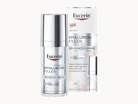
An advert for the Eucerin Hyaluron-Filler Epigenetic Serum has been banned by the Advertising Standards Authority (ASA) over unsubstantiated and misleading claims.
The ASA first received a complaint about the billboard advertisement in November 2025, after it appeared at London’s Balham Tube station.
Text on the advert claimed that the serum, developed by skin-care manufacturer Beiersdorf, was “clinically proven,” to help users “LOOK UP TO FIVE YEARS YOUNGER”. Smaller text on the advertisement stated “*Product-in-use test over 4 weeks with 160 volunteers”.
According to the ASA, Beiersdorf had provided a lack of sufficient evidence to substantiate the claim on the billboard advertisement, which can no longer “appear again in the form complained of”.
Unsubstantiated claims
Eucerin is Beiersdorf’s leading dermatological skin care brand, with Beiersdorf describing its purpose as delivering “science-based care that transforms skin health globally”.
Burcu Andreae-Nehlsen, President Derma & Health Care at Beiersdorf, said of the brand upon its launch in Japan: “Eucerin stands for the life-changing power of dermatological skin care. Introducing the brand to the Japanese market demonstrates our commitment to science-backed skin care that make a real difference and our ambition to drive new opportunities for our Derma business.”
For its Hyaluron-Filler Epigenetic Serum – which Beiersdorf says “makes the skin look younger than its age and reverses 10 signs of aging” – the company conducted a study that involved 160 participants using the product for four weeks.
At the end of those four weeks, participants were asked how much younger they thought they looked compared to before they started using the product – meaning the “up to” claim reflects a maximum rather than a typical result.
How can an advertisement be ‘clinically proven’?
When advertising cosmetic or skincare products, the ASA requires organisations to hold clinical evidence of any efficacy claims.
In particular, it advises that marketers should avoid supporting an objective claim – such as a decrease in wrinkles – with subjective feedback, like customer responses.
Any marketer looking to make a new or breakthrough claim must have sound data to form a “body of evidence,” which usually has to include at least one controlled human study.

Advertisers should also avoid exaggeration when it comes to post-production, as the ASA has previously upheld complaints where re-touching of photographs has been considered to give a misleading impression on product results.
Rooting advertising in substantiated claims, ASA CEO Guy Parker argues, can actually help improve its effectiveness. In an interview with edie discussing greenwashing claims, he suggested that a lack of exaggeration can improve overall consumer trust.
“I think your ads will be better off for it,” He said. “People don’t expect you to have solved this problem, they know that it’s a process. Being a bit humble, I think, makes for more credible and more believable, better ads.”
Company portals


Executives
Burcu Andreae-Nehlsen
President of Derma & Health Care - Member of the Executive Committee @ Beiersdorf
Guy Parker
Chief Executive